Can Rimless Glasses Have Progressive Lenses? A Fit Guide
Yes—rimless glasses can have progressive lenses. The key is choosing a lens shape and height that leave enough usable space for the distance, intermediate, and near viewing zones, then placing those zones with accurate prescription and fitting measurements.
Rimless eyewear can be an excellent match for progressive lenses because the lens shape and size are customizable. The frame design does not determine the lens shape: you can select a frame style, then choose the lens shape, dimensions, and overall look separately, subject to prescription and manufacturing suitability.
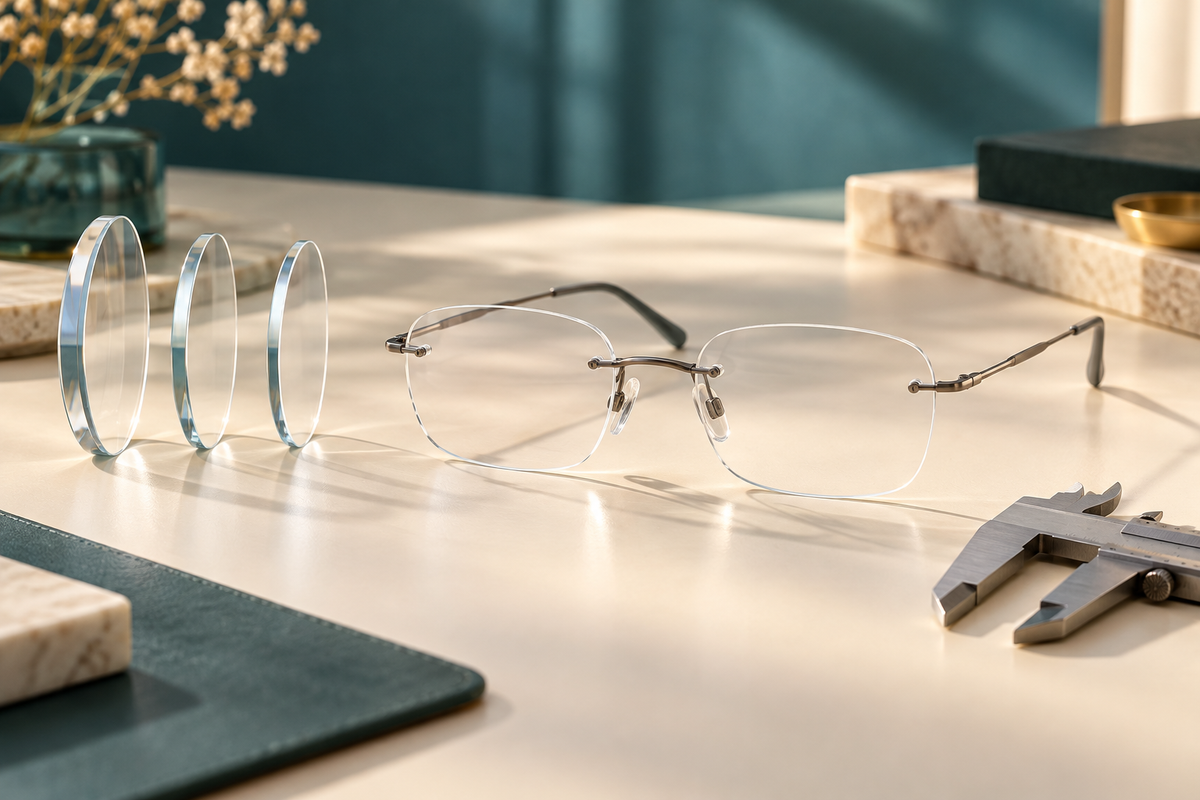
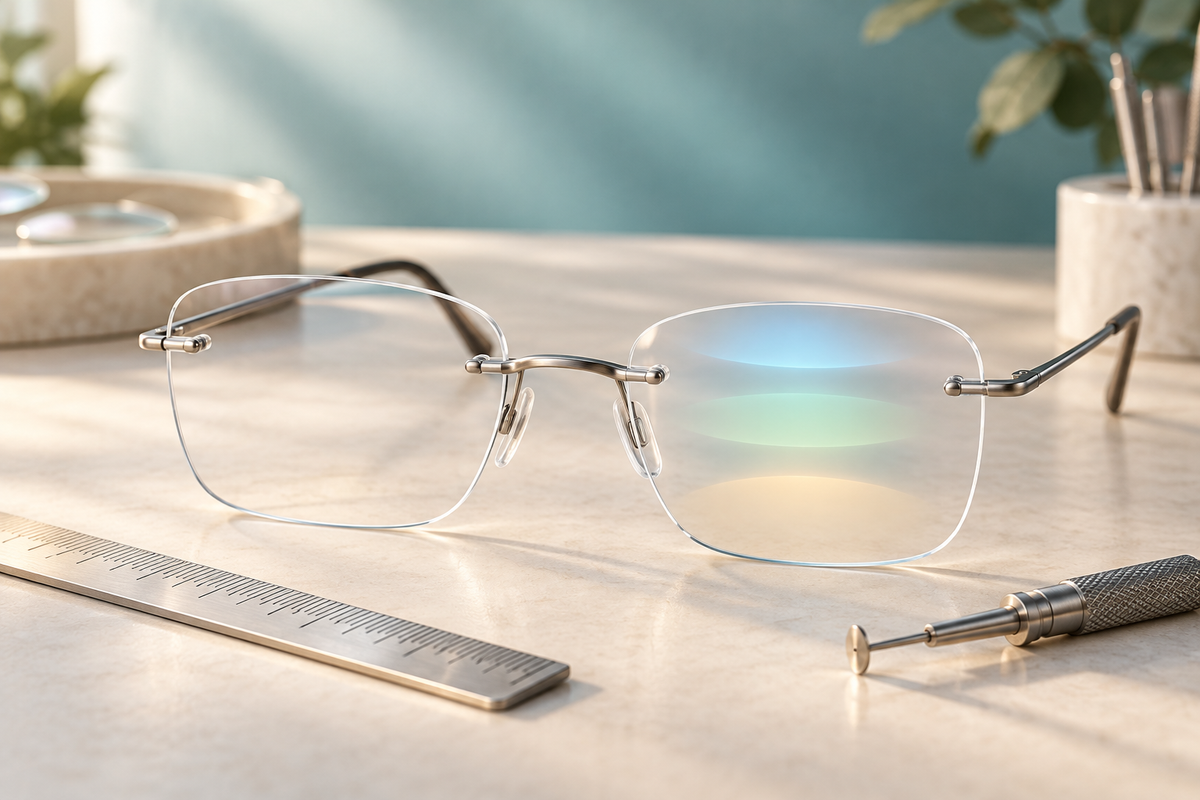
Main image: AI-generated editorial illustration of progressive viewing zones and fitting tools. It is not a photograph of a Rimless Wear product or a clinically exact lens map.
What do progressive lenses do?
Progressive lenses combine several viewing distances in one lens without a visible bifocal line. In a typical design, the upper area is used for distance vision, the middle corridor supports intermediate tasks such as viewing a computer screen, and the lower area provides near vision for reading.
The change between zones is gradual. Because those zones must fit within the finished lens, the lens dimensions and the position of your eyes behind the lenses matter.
Why lens height matters
A progressive lens needs enough vertical room to place its viewing zones. The exact minimum fitting height is not universal: it depends on the progressive design, prescription, measurements, and manufacturing specifications. This is why choosing the shortest possible lens simply for appearance can limit which progressive designs are suitable.
With custom rimless glasses, this does not mean you must choose an oversized lens. It means the proportions should be planned around both style and vision. A modest increase in lens height—or a slightly different version of the same shape—may create a more useful near zone while keeping the overall look refined.
Explore the available shapes and sizing approach on the custom rimless glasses page. Live Try-On is useful for comparing appearance and proportions, but it does not replace the measurements used to manufacture progressive lenses.
Four details that affect the finished progressive lenses
- Your complete prescription: Progressive orders generally include an ADD value for near vision, in addition to the distance prescription. Other prescription details may also affect what can be produced.
- Pupillary distance: PD helps position the optical design horizontally. Monocular PD values—one measurement for each eye—may be needed for accurate placement.
- Fitting height: This vertical measurement helps position the progressive corridor and near area within the selected lens shape.
- Lens shape and size: Width, height, pupil position, and the shape’s lower area all influence how much usable room is available for the progressive design.
Additional position-of-wear measurements may be appropriate for some lens designs. The exact information required depends on the prescription and selected option.
Can any rimless lens shape use progressives?
Not every shape-and-size combination will be suitable for every progressive design. A very shallow lens may not provide enough vertical space. A dramatic specialty shape may also place less lens area where the near zone needs to sit.
That does not automatically rule out the style you like. Because Rimless Wear separates the frame choice from the lens shape, the shape can often be adjusted in size or proportion. The practical approach is to choose your preferred look first, then review whether the prescription, fitting height, and progressive design work with it.
Progressive lens options at Rimless Wear
Rimless Wear currently lists three progressive choices:
- Standard Progressive for seamless correction across viewing distances.
- Digital HD Progressive, described as providing a wider corridor and field of vision with less distortion than the standard option.
- Premium Wide Progressive, described as offering the widest corridor among the currently listed Rimless Wear choices, with minimal distortion and smoother transitions.
The best option is not determined by price or the words “standard” and “premium” alone. Your prescription, preferred lens shape, measurements, previous progressive experience, and everyday viewing needs should be considered together. Availability can vary by the complete lens configuration.
Progressive, bifocal, or single-vision?
Single-vision lenses correct one viewing range, such as distance or reading. Bifocals combine distance and near areas with a visible dividing line. Progressives provide a gradual transition through distance, intermediate, and near zones without that visible line.
If your prescription does not contain an ADD value, it commonly indicates a single-vision prescription rather than a multifocal one. If it does contain an ADD, your eye-care professional can explain whether progressive, bifocal, or separate single-vision glasses suit your visual needs.
Common mistakes to avoid
- Choosing shape by appearance alone: Confirm that the height and proportions work with the selected progressive design.
- Estimating measurements: Small placement differences can affect how the viewing zones line up with your eyes.
- Using an incomplete prescription: Include every value shown, including ADD and prism when present.
- Assuming the frame fixes the lens shape: In rimless eyewear, the shape is customizable and should be planned as part of the optical design.
A simple ordering checklist
- Choose your preferred frame design and color.
- Select a lens shape and size that you like.
- Provide the complete, current prescription and requested measurements.
- Choose the progressive design and any compatible material or coating options.
- Have the complete combination reviewed before manufacturing.
You can begin your custom rimless order and build the style step by step. If you are unsure whether a specific shape is suitable, contact Rimless Wear with the prescription and preferred width for guidance.
This article provides general product education, not individualized medical advice. Questions about changes in vision, prescription accuracy, or eye health should be discussed with an eye-care professional.
Frequently asked questions
Do progressive rimless glasses have a visible line?
No. Progressive lenses transition gradually between viewing zones and do not have the visible segment line found in traditional bifocals.
Can I choose a small lens shape?
Possibly. The shape must still provide enough height for the selected progressive design. A small adjustment to the lens height or proportion may make a preferred style more suitable.
Does the frame model decide my progressive lens shape?
No. With Rimless Wear, the frame design and lens shape are separate choices. You can customize the shape, size, and style, subject to prescription and manufacturing suitability.
Can progressive rimless glasses also be sunglasses?
Progressive designs can be combined with sun-lens options in many configurations, but availability depends on the prescription, material, tint or polarization choice, and selected progressive design.
How do I know which progressive option to choose?
Compare the available designs using your prescription, measurements, preferred shape, daily tasks, and previous experience. A wider design may be useful for some wearers, but it is not automatically necessary for everyone.
Sources and availability check
Checked October 9, 2026. Current Rimless Wear progressive options were verified against the active product listings. General fitting guidance was reviewed against ZEISS frame and progressive-lens guidance, ZEISS progressive-lens information, and HOYA fitting-measurement guidance.