
News / October 24, 2026
How Do Adjustable Nose Pads Help Rimless Glasses Fit?
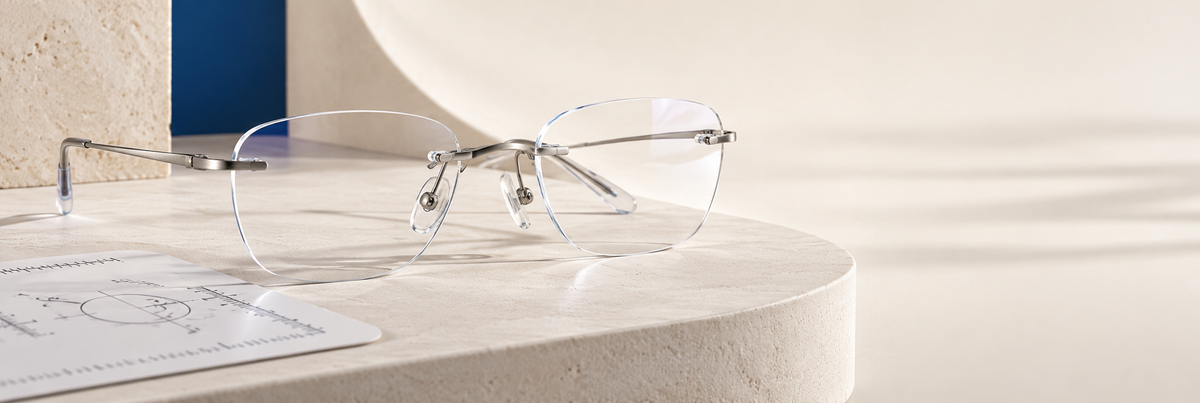
Short answer: Adjustable nose pads help rimless glasses sit more securely and comfortably by fine-tuning where the frame rests on your nose. A careful adjustment can change the glasses’ height, balance and distance from your cheeks or eyelashes. Nose pads are important, but they are only one part of a good fit: bridge size, overall frame width, temple length, lens shape, lens size and prescription measurements still matter.
On many rimless designs, the lenses appear to float while the bridge and temples attach directly to them. That light, minimal construction makes the small contact points at the nose especially noticeable. When the pads sit evenly, the frame should feel balanced rather than pinched, tilted or constantly in need of a push.
Main image: AI-generated conceptual editorial image showing rimless eyewear and adjustable nose pads; it is not a photograph of a specific Rimless Wear product.
What do adjustable nose pads actually change?
Adjustable nose pads are usually attached to small pad arms near the bridge. An optician can make small changes to their spacing, angle and position so the pad surfaces meet your nose more evenly. Depending on the frame and your facial features, that can influence:
- Frame height: how high or low the glasses sit on the nose.
- Stability: whether the glasses stay in place during normal movement.
- Pressure distribution: whether both pads share the load or one side presses more.
- Clearance: the distance between the lenses and your eyelashes or cheeks.
- Visual balance: whether the lenses appear level when the glasses are worn.
Soft silicone-style pads may also provide a cushioned contact surface and a little more grip for some wearers. Rimless Wear product specifications should always be checked individually, but many current designs—including the TitanLite YJ2202—list adjustable silicone nose pads.
Nose pads are one part of the complete fit
A useful way to think about fit is as a small system. Adjusting one component can help, but it cannot replace the job of another component.
| Fit factor | What it influences | What nose-pad adjustment cannot replace |
|---|---|---|
| Nose pads | Contact, height, balance and grip at the nose | The frame’s fixed metal bridge measurement |
| Overall frame width | How the glasses span the face from hinge to hinge | A frame that is fundamentally too wide or narrow |
| Temple length and bend | Side support and how the arms sit around the ears | Incorrect arm length or major temple misalignment |
| Lens shape and size | Proportion, coverage, clearance and finished lens weight | A lens outline or dimension that does not suit the intended fit |
| Prescription measurements | Where the optical zones are positioned in front of the eyes | Missing or unsuitable prescription and fitting information |
Rimless Wear treats the frame as the foundation—not as a rule for the lens outline. The frame design does not determine the lens shape. Customers can choose a shape, refine the lens dimensions and select a preferred overall width when configuring eligible custom rimless glasses. The frame and lens sizing guide explains how overall width, lens width and lens height relate.
What should a comfortable rimless fit feel like?
Fit is personal, but a well-adjusted pair will usually feel calm on the face: the glasses remain reasonably stable without strong pressure, the two pads make broad and even contact, and the temples do not squeeze the sides of the head. The lenses should normally stay clear of the eyelashes and should not repeatedly touch the cheeks during ordinary facial movement.
A perfectly symmetrical appearance is not always realistic because faces and ears are naturally different from side to side. The practical goal is balanced comfort and stable lens position—not forcing every component into identical angles.
Common fit clues—and what they may mean
| What you notice | Possible fit factor | Sensible next step |
|---|---|---|
| The glasses slide down repeatedly | Pad contact, overall width, temple fit, heat or skin oils | Clean the pads and ask an optician to evaluate the complete fit |
| One pad feels sharper than the other | Uneven pad angle or normal facial asymmetry | Have the pad surfaces aligned to rest more evenly |
| The lenses touch eyelashes or cheeks | Frame position, pad height, lens size or shape | Review both the adjustment and the selected lens dimensions |
| The glasses look tilted | Pad balance, temple position or differences between the ears | Ask for a full frame fitting rather than changing one pad alone |
| A lens or drilled mounting moves | Mounting hardware, bushing or attachment issue | Stop adjusting it yourself and have the rimless mounting inspected |
These clues are starting points, not diagnoses. If vision remains uncomfortable, the image seems distorted, or the glasses do not feel right after a frame adjustment, consult a qualified eye-care professional who can check both the fit and the prescription.
Should you adjust rimless nose pads yourself?
Start with observation, not bending. In good light, look at how both pad surfaces meet the nose and check whether the frame is obviously twisted. Clean skin oils from the pads using the care method recommended for your eyewear. Our rimless-glasses cleaning guide explains how to support the frame and avoid unnecessary twisting while cleaning.
Significant adjustments are best handled by an optician. Nose-pad arms are small, and bending them too far can alter the bridge area or create new pressure points. Rimless lens mountings also deserve special care because the hardware connects directly through the lenses. Do not use lens-mount screws as a way to change the frame fit, and do not keep tightening a moving drilled connection.
What to check when choosing a rimless frame with nose pads
- Read the individual specifications. Look for the bridge measurement, temple length and whether the model lists adjustable nose pads.
- Compare overall width. Use a comfortable pair you already own as a reference, measuring hinge to hinge when possible.
- Choose lens dimensions thoughtfully. Shape and size influence appearance, cheek clearance and finished weight.
- Consider your lens type. Single-vision, progressive and bifocal lenses have different measurement needs; stable positioning is especially useful when the lens contains multiple viewing zones.
- Plan for a final fitting. Even carefully selected measurements may benefit from a small professional adjustment once the finished glasses are worn.
Explore current rimless frame styles, then confirm the specifications on the model you prefer before ordering.
Frequently asked questions
Can adjustable nose pads stop rimless glasses from slipping?
They can help when the slipping is related to pad contact or position. Slipping can also come from frame width, temple fit, skin oils or worn components, so the complete frame should be checked rather than assuming the pads are the only cause.
Do adjustable nose pads change the bridge size?
No. They can change how the frame contacts your nose, but they do not change the metal bridge’s stated measurement. Both the bridge specification and pad adjustment contribute to the finished fit.
Are all rimless glasses fitted with adjustable nose pads?
No. Construction varies by design. Many current Rimless Wear product pages list adjustable silicone nose pads, but customers should verify the specifications for the exact frame they are considering.
Do nose pads affect progressive or bifocal lenses?
Nose pads do not create or change the prescription, but they can influence where the glasses sit. Stable, repeatable frame position helps the lenses remain where they were intended to be worn. Prescription and fitting measurements should come from the appropriate eye-care professional.
Can I choose a different lens shape when the frame has nose pads?
Yes, on eligible Rimless Wear designs. Nose-pad construction and lens outline are separate choices. The frame model does not lock you into one lens shape: you can customize the lens shape, size and overall style within the available ordering options and prescription requirements.
The practical takeaway
Adjustable nose pads are small parts with a useful job: they help fine-tune contact, stability, height and balance. The best result comes from treating them as part of the complete fit—alongside bridge measurement, overall width, temples, lens dimensions and prescription details. Choose the shape you love, select the size thoughtfully, and let a professional make the final small adjustment when needed.