Which Lens Coating Is Best for Rimless Glasses? A Clear Guide
For most rimless glasses, an anti-reflective coating is the most broadly useful upgrade because it reduces distracting reflections and keeps the lenses looking clearer. Easy-clean and smudge-resistant properties are valuable for frequent wear, while anti-fog and blue-light-filtering options solve more specific needs. The right choice depends on where you wear your glasses, how often you clean them, and which lens material and prescription you select.
Rimless Wear currently offers coating choices that include anti-glare, easy-clean, Crizal, anti-fog, and clear blue-light-blocking options. Exact compatibility can vary with the complete lens configuration, so treat coatings as part of the whole lens—not as an isolated add-on.
One useful distinction: a coating does not determine the lens shape. At Rimless Wear, the frame design and lens outline are selected separately. You can customize the shape, size, and style of the lenses, then choose suitable materials, prescription options, and treatments. That freedom matters because rimless lenses have visible surfaces and exposed edges, making clarity and finish especially noticeable.
What does a lens coating actually do?
A lens coating is a thin treatment applied to one or both surfaces of an eyeglass lens. Depending on the product, it may reduce reflections, make water and fingerprints easier to remove, limit fogging, filter part of the blue-violet light spectrum, or add resistance to everyday surface wear.
Coatings do not replace an accurate prescription, appropriate lens material, or proper fit. They also do not make a lens impossible to scratch. Think of them as performance layers chosen after the essential decisions—prescription, lens design, material, index, shape, and size—are understood.
Anti-reflective coating: the best starting point for many wearers
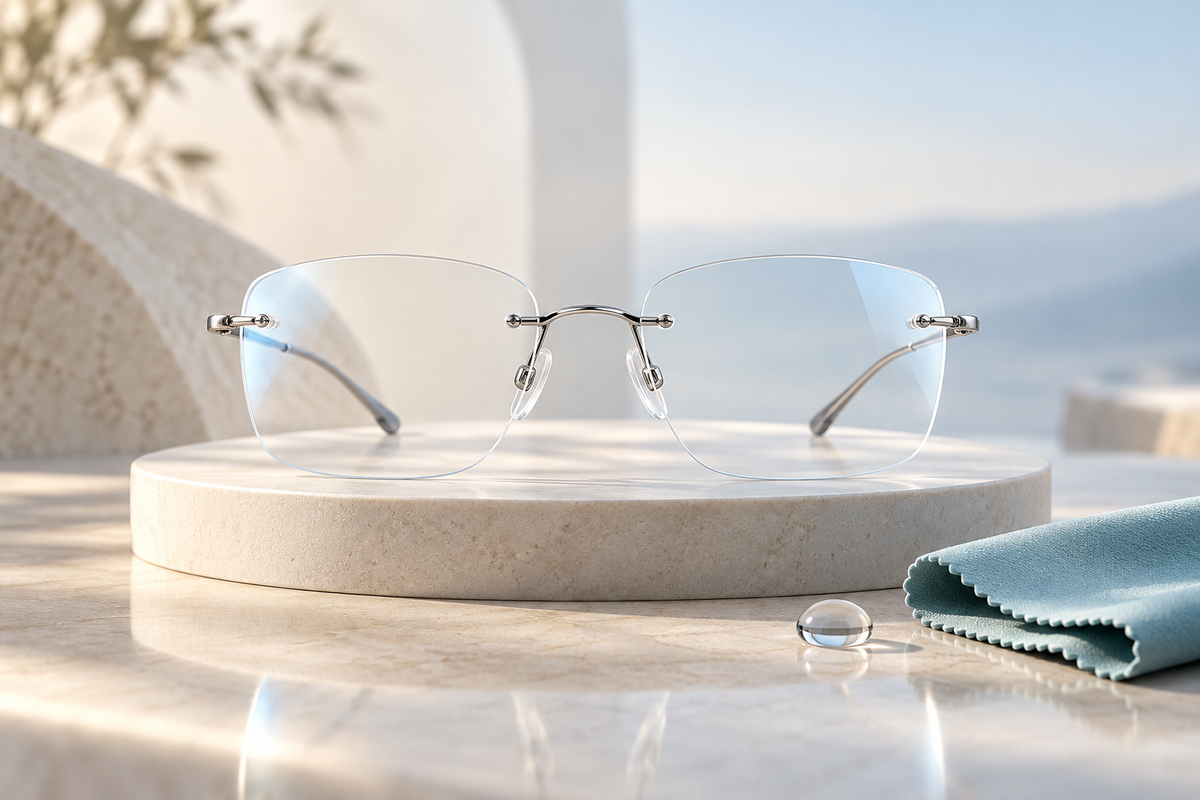
Anti-reflective coating, also called AR or anti-glare coating, is designed to reduce light reflected from the front and back surfaces of a lens. That can make the lenses appear more transparent and reduce distracting reflections from overhead lighting, windows, headlights, and screens.
This is particularly relevant to rimless eyewear. With no full rim around the lens, reflections can become one of the most visible parts of the glasses. A well-chosen AR treatment helps preserve the clean, open appearance that many people want from rimless frames.
Rimless Wear lists anti-glare and Crizal choices in its current lens customization information. Different products can bundle AR performance with easy-clean, water-repellent, smudge-resistant, or scratch-resistant properties. For example, Essilor describes Crizal Sapphire HR as reducing reflections from multiple directions while also resisting smudges, water, dust, and everyday surface wear. Product availability and compatibility still depend on the selected lens.
Easy-clean and smudge-resistant treatments
Clear rimless lenses show fingerprints, skin oils, and dust easily because there is no surrounding frame to distract from the lens surface. An easy-clean treatment is intended to make those marks less likely to cling and easier to remove with proper cleaning.
This option can be especially useful if you:
- wear your glasses throughout the day;
- frequently touch or adjust the lenses;
- work in dusty, humid, or splash-prone environments; or
- prefer a lower-maintenance surface.
Easy-clean does not mean “never clean.” Use lukewarm water, a suitable lens cleaner when needed, and a clean microfiber cloth. Avoid paper towels, household glass cleaner, and dry rubbing. The rimless glasses cleaning guide explains a coating-friendly routine.
Scratch resistance: helpful protection, not scratch-proof glass
Many modern eyeglass lenses include a hard coat or scratch-resistant layer. Its job is to help the surface withstand ordinary handling better than an untreated lens. It cannot prevent every scratch, especially when grit is rubbed across a dry lens or the glasses are stored without a case.
This distinction matters for rimless glasses because the lens is also a structural part of the eyewear. Protecting the surface and the exposed edge helps maintain a clean finish, but careful handling is still essential. Always store the glasses in a protective case and place them with the lenses facing upward when a case is not available.
Anti-fog coating: useful for temperature and humidity changes
Fog forms when warm moisture condenses on a cooler lens surface. An anti-fog treatment is designed to reduce how easily that moisture forms an opaque layer. It may be helpful for people who move between cold and warm spaces, wear face coverings, work around steam, or experience frequent humidity changes.
No anti-fog solution should be treated as permanent or universal. Performance can depend on temperature, humidity, cleaning method, product instructions, and wear conditions. Some treatments require particular care products, so follow the directions supplied with the chosen lens option.
Blue-light-blocking lenses: a specific preference, not a cure-all
Rimless Wear currently offers a clear blue-light-blocking option. This feature filters selected wavelengths while keeping the lens appearance clear. It can suit customers who prefer blue-light filtration as part of their everyday lens package.
It is important to keep expectations realistic. A blue-light feature is not a substitute for an up-to-date prescription, comfortable screen distance, appropriate lighting, regular breaks, or professional eye care. If you have persistent headaches, eye discomfort, or changes in vision, consult a qualified eye-care professional rather than relying on a coating alone.
Backside anti-reflective coating for sunglasses
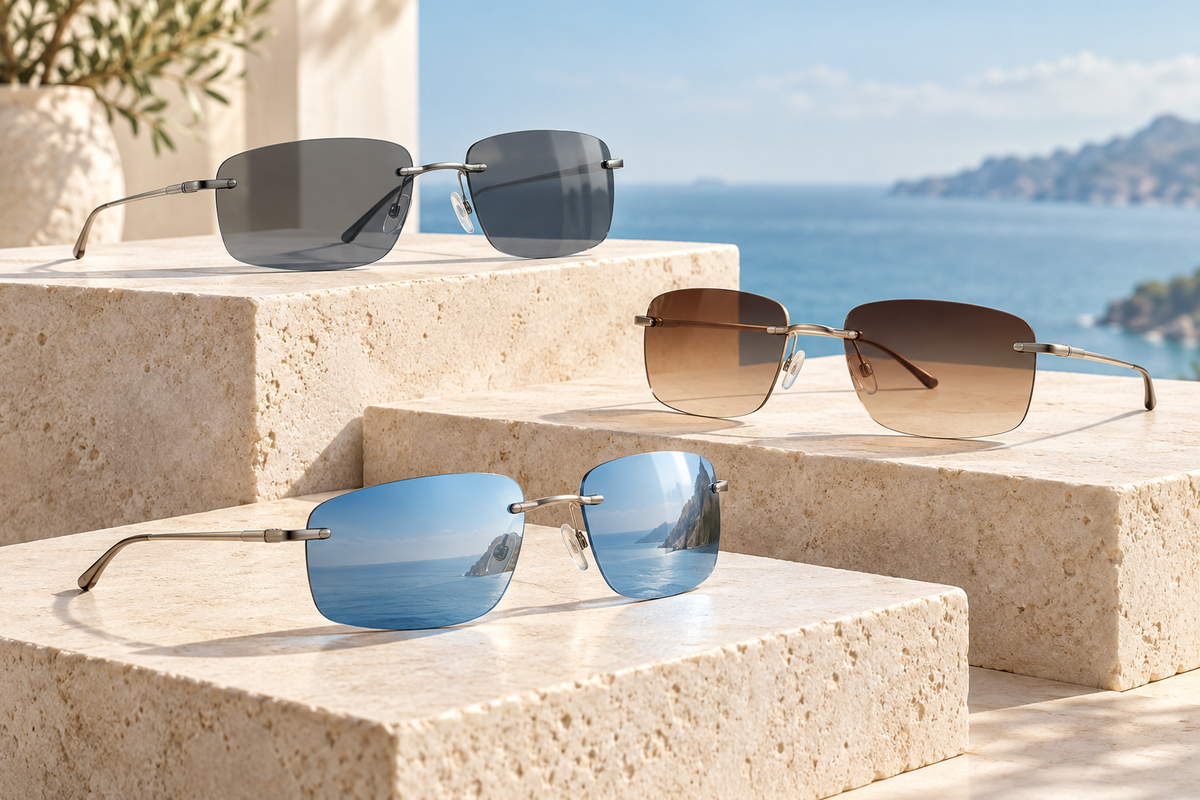
Sunglass lenses reduce incoming light through a tint, mirror, polarization, photochromic treatment, or a combination of compatible options. Reflections can still reach the inner surface from behind the wearer. A backside AR treatment is intended to reduce those rear-surface reflections.
This is separate from tint color, darkness, polarization, and mirror finish. If you are planning custom rimless sunglasses, compare the full lens package rather than assuming one feature includes the others. The guide to rimless sunglass lens options explains those differences.
How to choose the right coating combination
- Start with your prescription and lens design. Single-vision, progressive, bifocal, and non-prescription lenses can have different requirements.
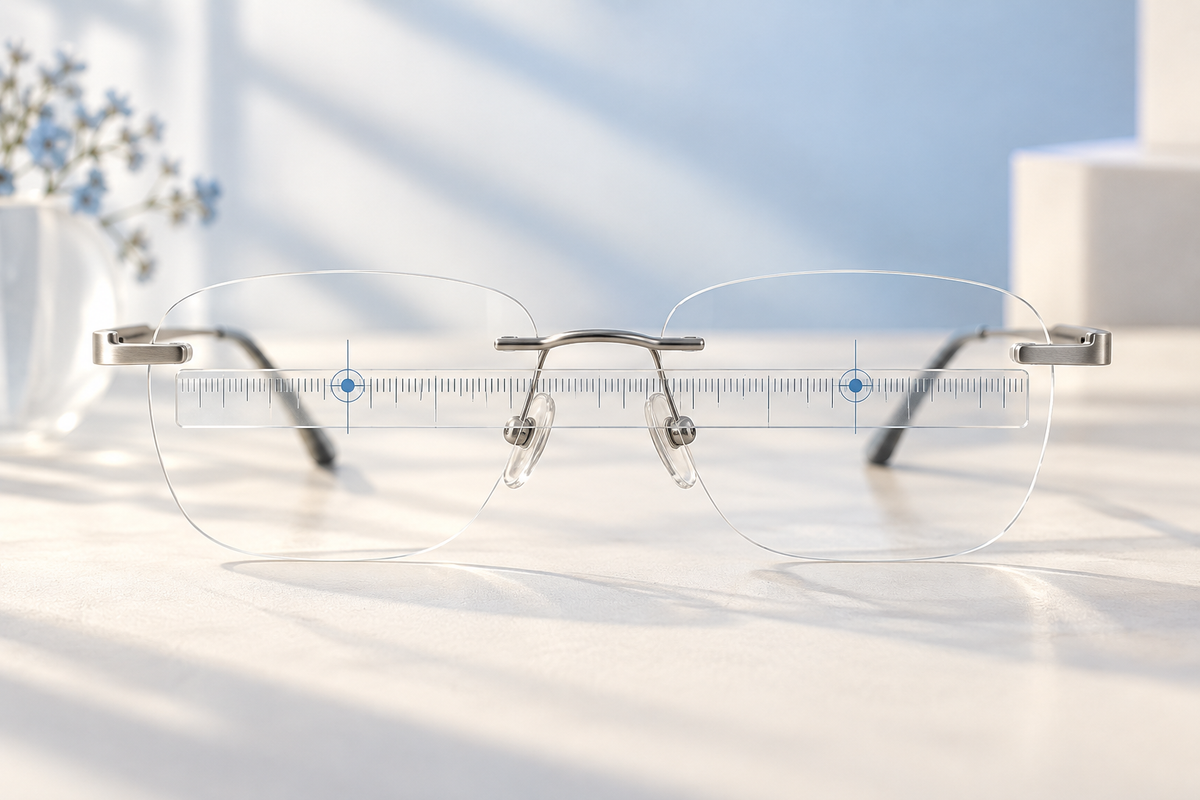
- Choose a suitable material and index. Lens thickness, weight, size, prescription, and drilling suitability work together in rimless eyewear. See the high-index lens guide for a practical comparison.
- Identify your main source of annoyance. Reflections point toward AR; fingerprints toward easy-clean; repeated fogging toward anti-fog; and a preference for selective wavelength filtration toward blue-light blocking.
- Consider maintenance. Even premium coatings last longer when cleaned gently and stored properly.
- Confirm compatibility. Not every coating, tint, material, index, or prescription can necessarily be combined. Review the complete configuration before ordering.
For a simple everyday pair, a quality anti-reflective treatment with easy-clean properties is a sensible place to begin. Add a specialized feature only when it addresses a real part of your routine.
Does lens shape change which coating you need?
Usually, shape does not decide the coating by itself, but size and prescription can influence the overall lens recommendation. Larger lenses have more surface area and may weigh more. Stronger prescriptions can make material and index more important. With rimless glasses, those factors also affect exposed-edge appearance and mounting suitability.
The frame design does not lock you into a lens outline. You can explore custom rimless glasses, choose from available shapes and sizes, and then match the lens treatment to your use. To begin a configuration, visit Rimless Wear frames.
Frequently asked questions
Do rimless glasses need anti-reflective coating?
It is not mandatory, but it is often useful. AR can reduce visible reflections and help clear rimless lenses maintain a more transparent appearance.
Is anti-glare the same as blue-light blocking?
No. Anti-glare reduces surface reflections. Blue-light-blocking technology filters selected wavelengths. A lens may offer one, both, or neither, depending on the product.
Can coated lenses still scratch?
Yes. Scratch-resistant treatments improve resistance to everyday wear but do not make lenses scratch-proof. Clean away grit before wiping and store the glasses in a case.
Can I combine anti-reflective and anti-fog treatments?
Some combinations may be available, but compatibility depends on the lens product, material, prescription, and manufacturing system. Confirm the complete selection before ordering.
Do coatings change my rimless lens shape or size?
No. Coatings change surface performance, not the outline. The frame design also does not determine the lens shape; Rimless Wear lets customers customize shape, size, and style subject to prescription and manufacturing suitability.
Where can I see Rimless Wear’s current coating choices?
The Rimless Wear lens customization FAQs list current categories including anti-glare, easy-clean, Crizal, anti-fog, and blue-light-blocking options. Available combinations can vary.
Source and availability check
Checked October 13, 2026. Rimless Wear’s customer-facing FAQ was used to verify the currently listed coating categories. General descriptions were cross-checked against current manufacturer information where a branded product was discussed. This guide provides general product education, not individualized medical advice.