Can Rimless Glasses Be Made Into Sunglasses? Your Lens Options
Yes—rimless glasses can be made as prescription or non-prescription sunglasses. You can combine a rimless frame with your preferred lens shape and size, then choose a solid tint, gradient tint, mirror finish, polarization, or an available photochromic option. The best configuration depends on how you plan to use the glasses, your prescription, and the lens material.
One important detail makes rimless sunglasses especially flexible: the frame design does not determine the lens shape. You select the bridge-and-temple style separately, then customize the lens outline, dimensions, color, darkness, and available sun options. This lets the same frame feel understated with a soft gray tint or more expressive with an oversized geometric mirrored lens.
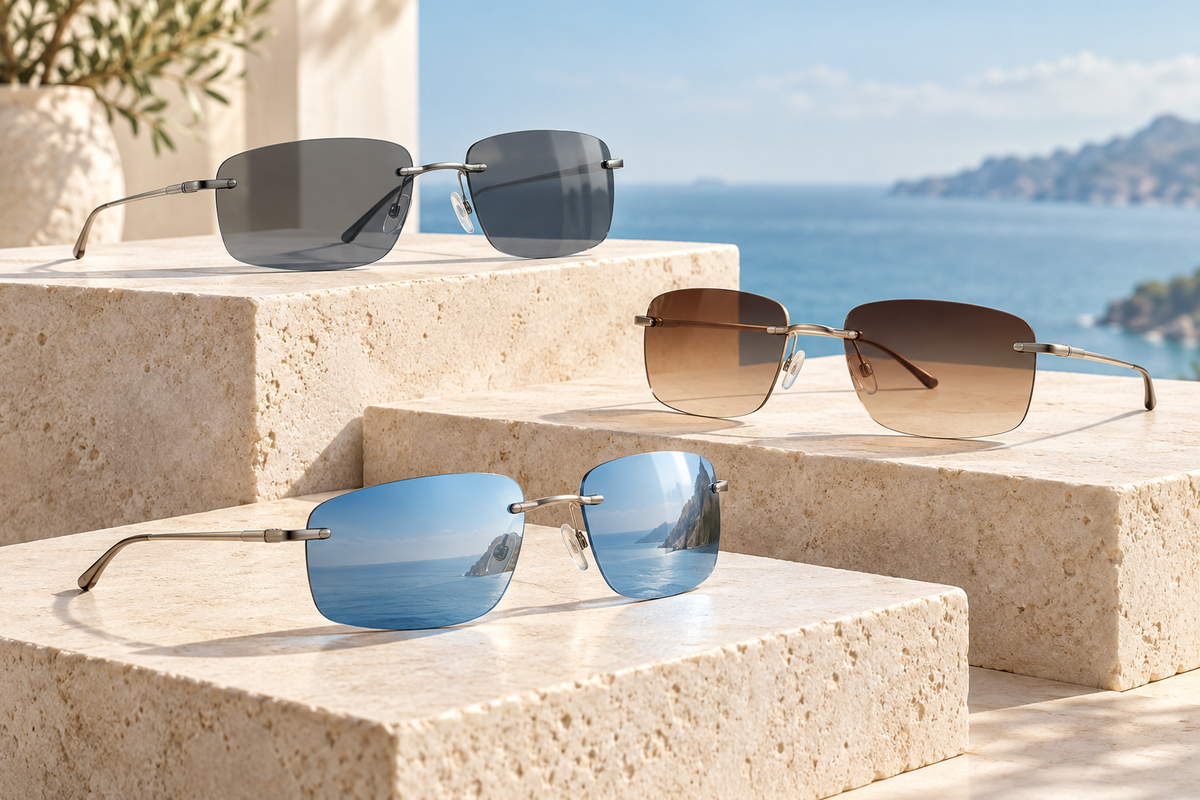
Main image: AI-generated editorial illustration comparing sun-lens finishes. It is not a photograph of Rimless Wear products or customer orders.
Which rimless sunglass lens should you choose?
Start with the visual effect and lighting conditions you expect most often. These are the main options available through Rimless Wear’s current customization process:
- Solid tint: One consistent shade from the top to the bottom of the lens.
- Gradient tint: Darker at the top and gradually lighter toward the bottom.
- Mirror finish: A reflective outer appearance that adds a distinctive color and style.
- Polarized lenses: Designed to reduce reflected glare from surfaces such as roads and water.
- Photochromic lenses: Light-adaptive lenses that darken outdoors and become clearer indoors, with performance varying by the selected product and conditions.
Some features can be combined, while others depend on the prescription, lens material, tint, coating, and manufacturing compatibility. Review the available choices for the complete order rather than assuming every finish works with every lens.
Solid tint: consistent color and coverage
A solid tint keeps approximately the same color intensity across the whole lens. It creates the familiar look of traditional sunglasses and works well when you want an even visual appearance.
Solid tints are available in different colors and darkness levels. Neutral colors can feel classic, while warmer or more colorful tones can become part of the design. Because rimless lenses have exposed edges, the combination of tint, shape, and polished edge can be especially noticeable.
A darker appearance does not, by itself, describe every performance specification. Tint darkness, UV protection, polarization, and coatings are separate choices or properties, so check the complete lens description when ordering.
Gradient tint: darker above, lighter below
A gradient lens transitions from a deeper shade at the top to a lighter shade near the bottom. Visually, it gives rimless sunglasses a softer, more open look than a uniform dark tint.
The darker upper area can be useful when light comes from above, while the lighter lower area can make it easier to view items below eye level. That balance makes gradients popular for everyday fashion and mixed indoor-outdoor routines. They are not automatically polarized; polarization must be selected separately when available.
Mirror finish: a more expressive surface
A mirror finish creates a reflective appearance on the front surface of the lens. In rimless eyewear, where there is no surrounding rim, that reflective color can become the main visual feature.
Mirror finishes can look subtle or bold depending on the color and intensity. Think about the frame metal and lens outline together: a cool mirror can pair cleanly with silver or gunmetal, while warmer finishes can coordinate with gold or bronze. Availability varies with the chosen lens configuration.
Polarized lenses: designed for reflected glare
Polarized lenses use a filter intended to reduce horizontally reflected glare, which commonly comes from roads, water, snow, and other bright surfaces. This can be helpful for driving, walking near water, and other high-glare outdoor settings.
Polarization and tint are not the same thing. A lens can be tinted without being polarized, and polarized lenses still have a chosen base color or darkness. Some digital displays, instrument panels, or head-up displays may also look different through polarized lenses, so consider the devices and displays you use.
Photochromic lenses: one pair for changing light
Photochromic lenses—often called light-adaptive or Transitions lenses—darken in response to outdoor light and become clearer indoors. They can suit someone who prefers one pair for changing environments instead of switching between clear glasses and sunglasses.
The amount and speed of darkening can vary with the product, temperature, UV exposure, and surroundings. Standard photochromic lenses may behave differently behind a vehicle windshield because the windshield filters much of the UV light that activates many designs. Rimless Wear currently offers photochromic options, including Transitions products; the available choices depend on the lens selection.
Can rimless sunglasses have a prescription?
Yes. Rimless Wear currently supports prescription and non-prescription sunglasses. Prescription information can be uploaded, photographed, entered manually, or provided later during the ordering process.
The prescription affects which lens materials, indexes, sizes, and treatments are suitable. Stronger prescriptions may benefit from a smaller lens size or a higher-index material to help manage edge thickness and weight. Progressive sunglasses also need enough vertical lens height for their viewing zones.
For a deeper comparison, see the guides to high-index lenses for rimless glasses and progressive rimless lens fit. This article provides general product information and is not individualized medical advice.
Shape and size matter more in rimless sunglasses
With no full rim surrounding the lens, the outline itself becomes the design. A compact rectangle can feel precise and minimal; a large aviator can add coverage and presence; a round or geometric shape can make the tint or mirror finish the centerpiece.
Larger lenses may provide more coverage, but they can also increase weight, thickness, and the amount of visible tint. Prescription and manufacturing suitability still matter. Use physical measurements to choose the final size, and use Live Try-On as a visual comparison tool rather than a replacement for measurements.
You can explore custom rimless glasses and sunglasses or start with a frame. If none of the existing outlines matches your idea, Rimless Wear also accepts custom lens-shape submissions; the custom lens-shape guide explains the process.
A simple way to decide
- Choose solid tint for an even, traditional sunglass appearance.
- Choose gradient tint for a softer look with a lighter lower section.
- Choose a mirror finish when the reflective color is an important part of your style.
- Add polarization when reducing reflected glare is a priority and your displays work comfortably with it.
- Choose photochromic when you value automatic adaptation between indoor and outdoor environments.
Before ordering, review the intended use, prescription, lens material, shape, size, tint, coatings, and measurements as one complete system. Rimless Wear’s lens customization FAQs summarize the currently available sun-lens categories.
Frequently asked questions
Can any rimless frame become sunglasses?
Many rimless frame styles can be configured with sun lenses, but the final combination must be compatible with the prescription, lens material, size, shape, mounting design, and selected treatment.
Are polarized lenses always dark?
Polarization describes the glare-reducing filter, not a single darkness level. The finished lens also has a selected color and tint intensity.
Is a gradient tint polarized?
Not automatically. Gradient describes how the tint changes from top to bottom. Polarization is a separate option when available for the chosen configuration.
Can progressive lenses be made as rimless sunglasses?
They can when the prescription, lens material, shape, and vertical height provide enough room for the progressive design. Very shallow shapes may need adjustment.
Can I choose my own sunglass lens shape?
Yes. The frame design does not determine the lens shape. You can choose from existing shapes, adjust the size, or submit your own outline, subject to prescription and manufacturing suitability.
Do mirrored lenses replace polarization?
No. A mirror finish changes the front-surface appearance and can affect how much light reaches the lens, while polarization specifically targets reflected glare. They are distinct features.
Source and availability check
Checked October 12, 2026. Prescription and non-prescription sunglasses, solid and gradient tints, mirrored finishes, polarization, photochromic lenses, and the customization process were verified against Rimless Wear’s current customer-facing information and active catalog. Available combinations can vary by prescription and lens selection.