What Is Pupillary Distance (PD) for Rimless Glasses?
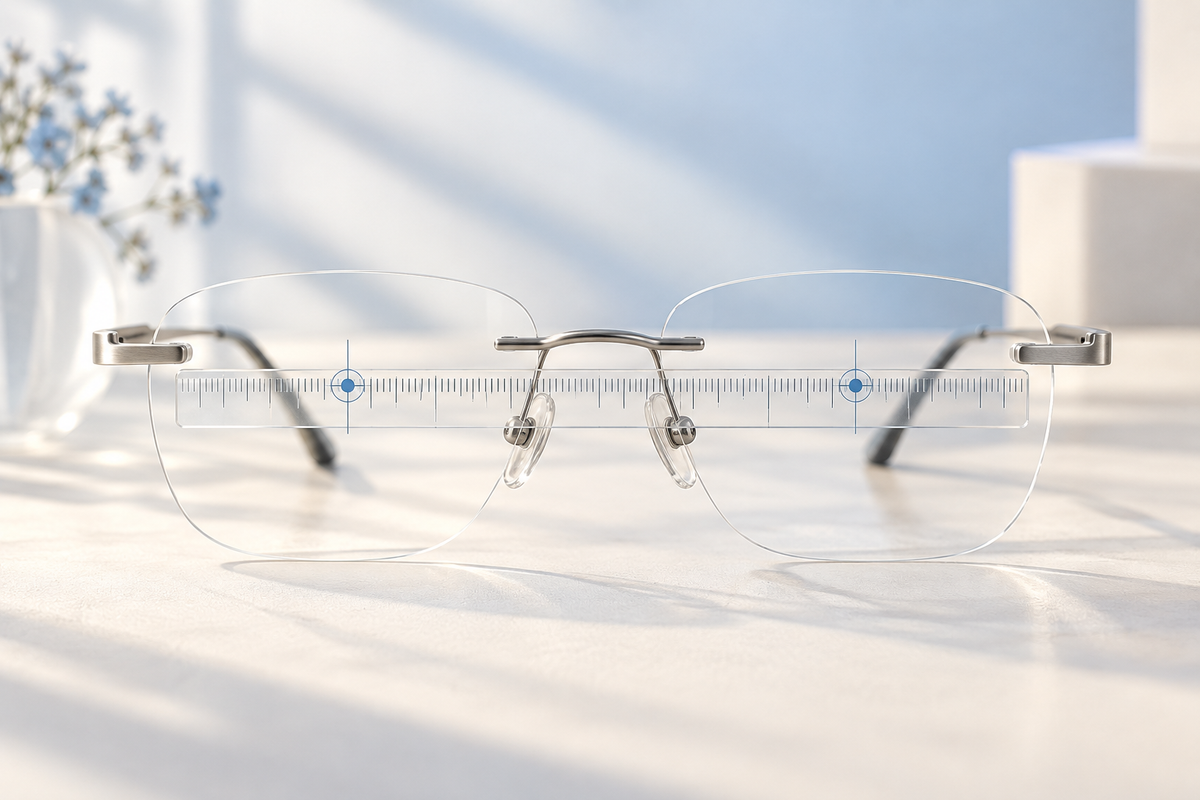
Pupillary distance (PD) is the distance, measured in millimetres, between the centres of your pupils. It helps an optical provider position the useful optical area of each prescription lens in front of your eyes. For custom rimless glasses, PD works alongside your prescription and fitting measurements—it is not the same thing as lens width, frame width, or lens shape.
That distinction matters because rimless eyewear separates two decisions that are easy to mix up: how your lenses are optically positioned and how they are designed to look. Your PD helps with the first. Your chosen lens shape, size, and styling create the second.
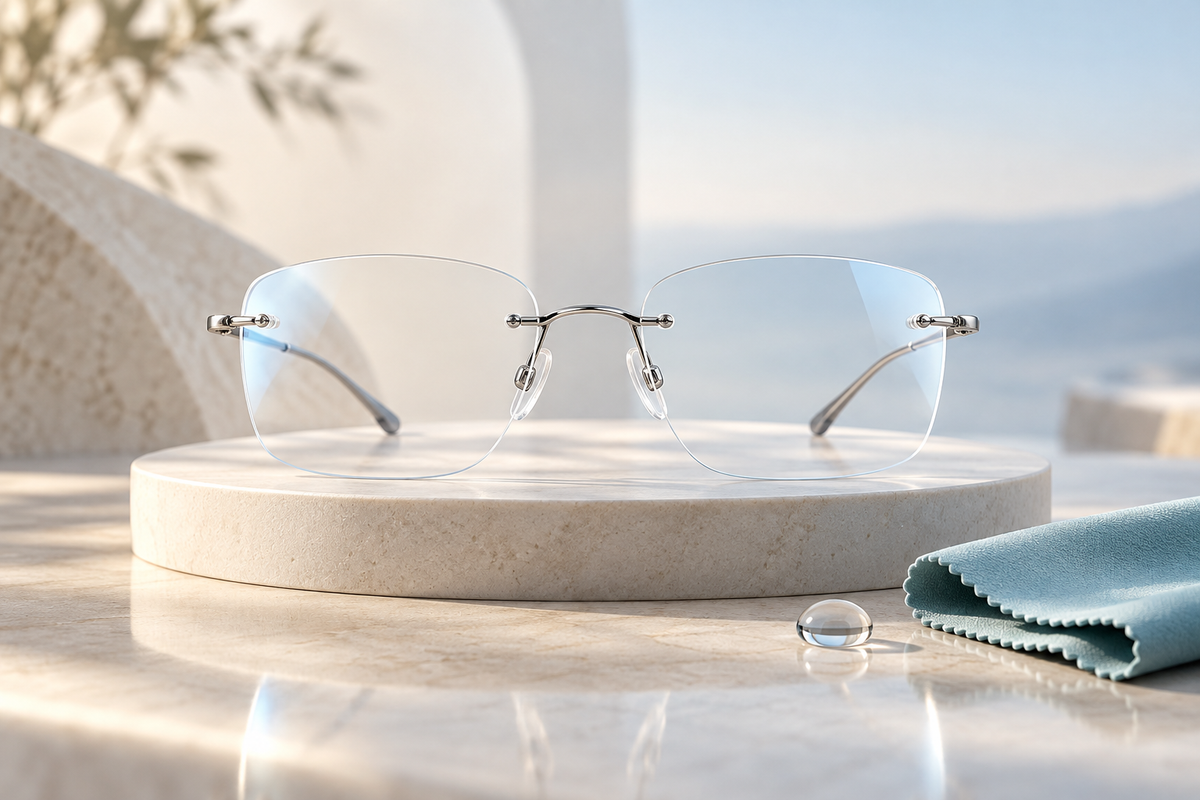
The main image is an AI-generated editorial illustration created to explain the measurement concept. It is not a product photograph or customer result.
What does PD measure?
PD describes the horizontal spacing of your pupils. In eyewear dispensing, that measurement helps determine where each lens should be centred relative to your eyes. It is one of several measurements that may be needed to make prescription glasses correctly.
You may see PD written in either of two common formats:
- Single, or binocular, PD: one total measurement from the centre of one pupil to the centre of the other.
- Dual, or monocular, PD: two measurements—one from the centre of the nose to each pupil. The right and left values are not always identical.
Neither format is inherently “better” for every order. What matters is supplying the format and measurement requested for the lenses being made. If you have only one format or are unsure which measurement you have, ask an eye-care or optical professional rather than converting or estimating it yourself.
Why does PD matter for rimless glasses?
Rimless glasses still use prescription lenses, even though there is no full frame surrounding them. The optical centres must be positioned for the wearer just as they would be in other prescription eyewear.
PD helps the lab relate your prescription to your eyes. It does not tell the lab everything about vertical positioning, lens use, or frame fit, but it is an important starting point. Accurate measurements become especially important when a prescription is stronger or more complex, or when the lenses are multifocal.
PD should not be guessed from a product image or a virtual try-on. Rimless Wear’s Live Try-On is useful for previewing appearance, while optical measurements should come from appropriate measuring information.
PD is not lens width or frame width
These measurements describe different things:
- PD measures the horizontal relationship between your pupils.
- Lens width measures one lens from its widest left-to-right points.
- Lens height measures one lens from top to bottom.
- Frame width describes the overall hinge-to-hinge width.
Rimless Wear’s lens-size guide explains how lens width, lens height, bridge width, and frame width work together. Your current glasses can provide a useful size reference, but their printed or measured frame dimensions do not replace your PD.
Does PD determine which lens shape you can choose?
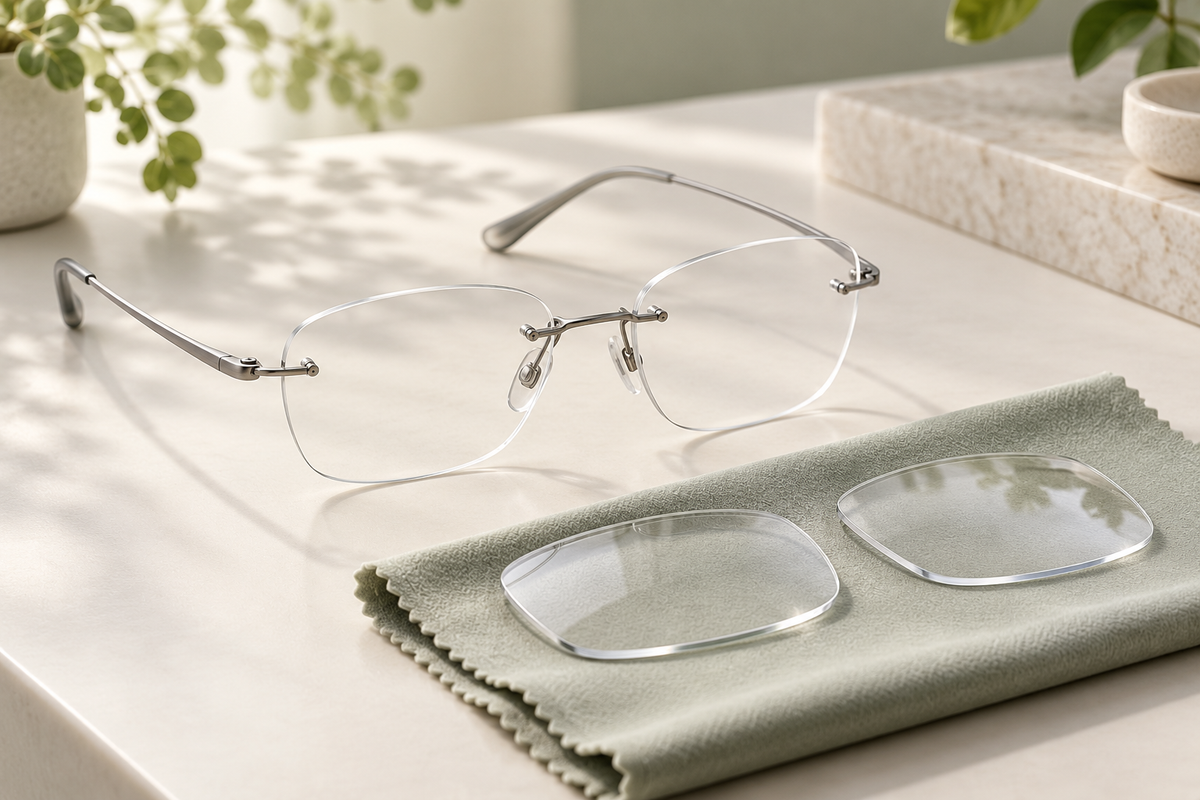
No. Frame design does not determine lens shape, and PD is not a style template. With custom rimless eyewear, the lens itself creates much of the visible silhouette. Customers can customize the lens shape, size, and style independently from the rimless hardware, subject to what is technically appropriate for the prescription and lens choice.
Rimless Wear currently offers more than 80 lens shapes and lets customers adjust lens width and height during customization. You can explore the rimless glasses collection and use the lens shape and size guide to narrow the visual direction.
The practical goal is to combine:
- a shape and size that suit your preferred look;
- an overall frame width that fits comfortably;
- a lens material and design appropriate for the prescription; and
- accurate optical and fitting measurements for the chosen lenses.
In other words, PD helps place the optics. It does not force you into a round, rectangular, oval, or geometric lens.
Distance PD, near PD, and intended lens use
A PD can be measured for distance viewing or for near work. The near value is typically different because the eyes turn slightly inward when focusing up close. The appropriate measurement depends on the type and intended use of the lenses.
Do not assume that a value labelled for one viewing distance can simply be reused for every lens design. If your document is unclear, confirm whether the measurement is for distance or near use with the professional who supplied it.
What about progressive lenses?
Progressive lenses need more than a horizontal PD. Their viewing zones must also be positioned vertically for the wearer, so a fitting height or related measurement is commonly required. The selected lens shape needs enough usable depth for the progressive design as well.
That does not mean progressive lenses require a bulky look. A suitable custom rimless shape can still feel light and refined. The key is coordinating the design with the prescription and fitting needs. See the progressive lenses and rimless glasses guide for a focused explanation.
Why might PD be missing from an eyeglass prescription?
PD is commonly treated as a dispensing measurement rather than a result of the eye examination itself. That is why it may not be printed on the prescription you receive from your prescriber.
If your PD is missing, the most reliable route is to use a measurement previously taken for you or ask an optical professional to measure it. Measuring systems can include a millimetre ruler or a pupil-measuring device. For multifocal, high, or otherwise complex prescriptions, professional fitting guidance is particularly useful.
How prescription details work with Rimless Wear customization
Rimless Wear allows customers to enter prescription information during customization. According to the current ordering FAQ, you can upload a prescription, take a photo of it, enter the details manually, or choose to send the prescription later.
Before production, the information needed for the selected lens design must be complete and usable. If your prescription document does not show PD or you are unsure which value applies, confirm it before relying on an estimate. For product-specific questions, contact Rimless Wear through the support options listed on the site.
A simple checklist before ordering custom rimless glasses
- Use a current prescription. Confirm that the sphere, cylinder, axis, and addition values—where applicable—are legible.
- Identify your PD. Note whether it is a single or dual value and whether it is intended for distance or near use.
- Know the lens purpose. Distance, reading, computer, and progressive lenses do not all use identical fitting information.
- Choose a shape you enjoy. Remember that the hardware does not lock you into one lens shape.
- Choose a sensible size. Compare lens and frame measurements with glasses that already fit you well.
- Confirm anything unclear. An optician or eye-care professional can clarify measurement and prescription questions; Rimless Wear can help with its customization and ordering process.
Frequently asked questions
Is PD the same as the numbers printed inside my glasses?
Usually not. Numbers printed on glasses commonly describe lens width, bridge width, and temple length. PD measures the spacing of your pupils.
Is single PD or dual PD more accurate?
They express the measurement differently. A single PD gives the total distance between pupils, while dual PD records the right and left distances from the centre of the nose. Use the format requested for your lens order rather than guessing or converting without guidance.
Can I use a virtual try-on to measure PD?
A virtual try-on is best treated as a styling preview. It should not replace a professional optical measurement, particularly for progressive or complex lenses.
Does a wider lens mean I need a larger PD?
No. Lens width is a design measurement; PD is a measurement of your eyes. A wider or narrower lens can change the look and overall frame dimensions, but it does not change your actual PD.
Can I choose any rimless lens shape if I know my PD?
PD alone does not determine shape compatibility. Your prescription, lens material, lens design, dimensions, and mounting requirements all matter. The good news is that frame design does not determine lens shape: customers can customize shape, size, and style, then coordinate those choices with the technical needs of their lenses.
The short answer
PD tells the optical lab where your pupils sit horizontally; it does not choose your style. For custom rimless glasses, combine an accurate PD and complete prescription with a lens shape, size, and frame width that suit you. That gives the optical information and the design choices separate jobs—and helps the finished eyewear feel both personal and purposeful.
This article provides general educational information and is not individualized medical or optical advice. Prescription and fitting needs vary; consult a qualified eye-care or optical professional for guidance about your measurements.