Polished vs. Non-Polished Lens Edges for Rimless Glasses
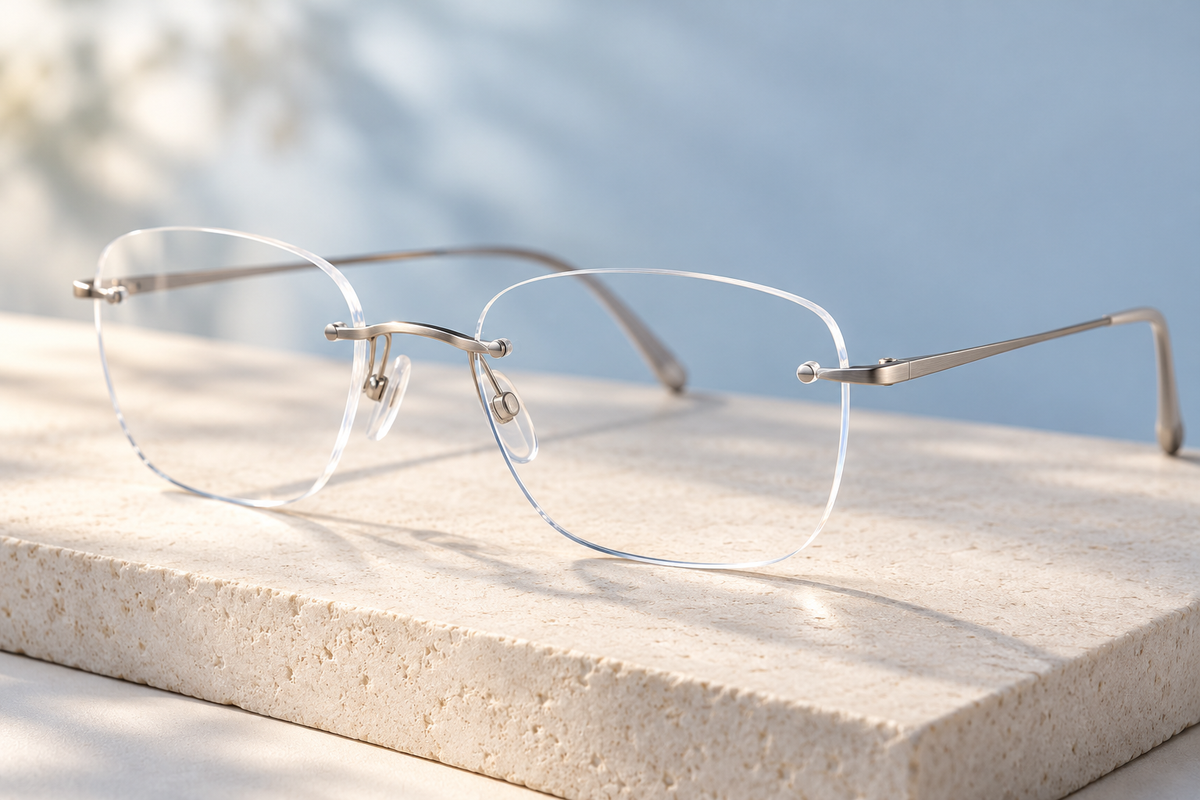
Polished lens edges have a smooth, glossy, more transparent appearance; non-polished edges have a more matte or frosted appearance. For rimless glasses, the difference is noticeable because there is no surrounding frame to hide the lens perimeter. Neither finish is automatically best: the right choice depends on the look you enjoy and how you respond to reflections around exposed edges.
Think of edge finishing as the final design detail—not a shortcut to thinner lenses or a replacement for an anti-reflective coating.
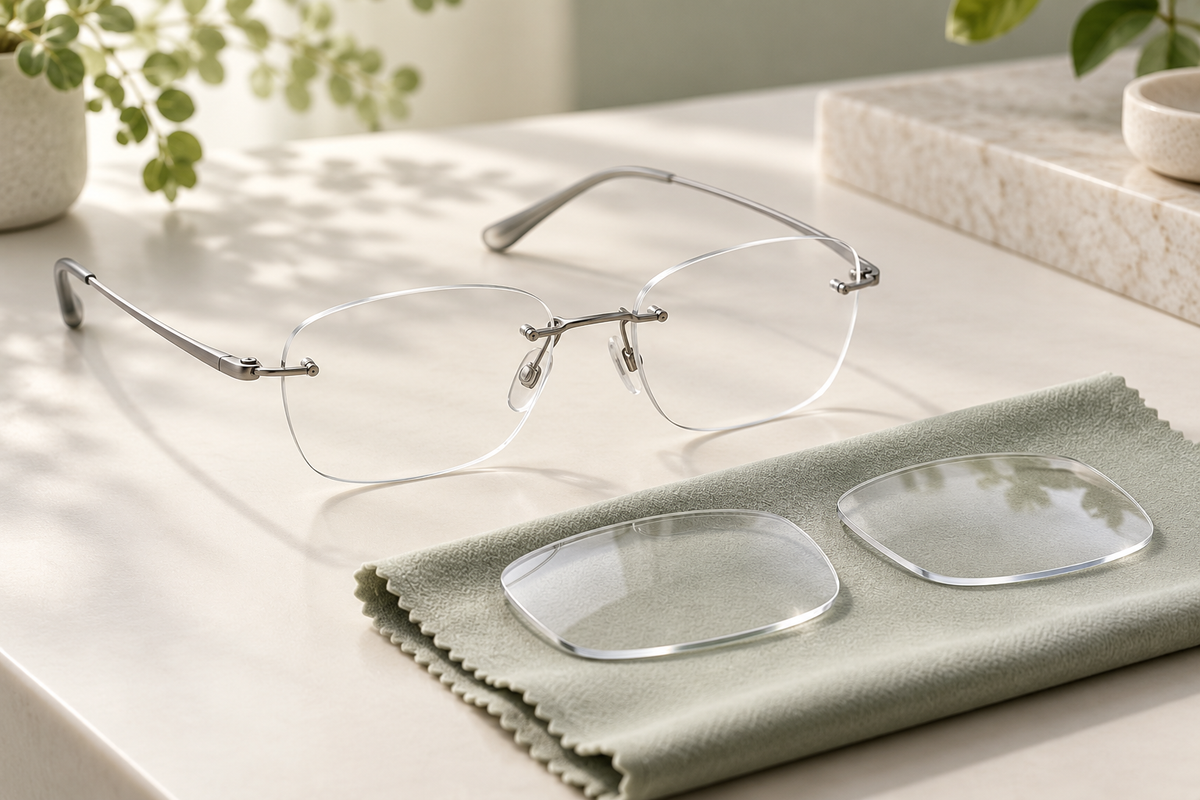
Main image: AI-generated editorial illustration highlighting exposed rimless lens edges. It is not a photograph of a Rimless Wear product, a measured finish comparison, or a customer result.
What is a polished lens edge?
After a lens is cut to its finished outline, its edge can be polished to create a glossier finish. Rimless Wear’s Polished Edges option describes this as a smooth, glossy finish that can make the edges less noticeable.
The appeal is a clearer-looking perimeter that blends visually with the transparent lens surfaces. It can complement a minimal rimless design, although lighting and viewing angle still affect how visible the edge appears. “Polished” does not mean “invisible.”
What does non-polished mean?
A non-polished edge does not receive the same glossy edge treatment. It generally looks more matte or frosted, which may make the outline easier to see from some angles. Rimless Wear also lists a Non-Polished option.
The name describes a finish preference, not an instruction to leave a lens sharp or a signal that the prescription is less accurate. Professional lens finishing involves more than adding gloss. A restrained, matte-looking edge can be an intentional choice rather than a flaw.
A quick comparison
| Detail | Polished edges | Non-polished edges |
|---|---|---|
| Typical appearance | Glossy and more transparent-looking | Matte or frosted-looking |
| Visual character | Clear, reflective finishing detail | Less glossy, more defined outline |
| A useful starting point | You like a clear-looking edge and have been comfortable with polished edges before | You prefer a matte finish or want to discuss edge reflections before choosing |
These are general appearance differences, not guaranteed results for every prescription or lighting condition. If possible, compare finished samples rather than judging the entire choice from a product photograph.
Can polished edges create reflections?
They can. Light entering or reflecting at an exposed glossy edge may be noticeable to some wearers, especially under certain overhead or side lighting. Other wearers enjoy polished edges without finding them distracting. There is no reliable promise that everyone will experience the finish the same way.
If you already own glasses with polished edges, your experience is a useful conversation starter. Tell your optical provider whether you liked the appearance and whether edge reflections bothered you. If reflections are your main concern, ask about the finish before production rather than assuming that extra gloss must mean extra visual comfort.
This is also why an online image cannot settle the choice completely: it shows one scene, from one angle, rather than the lighting in your office, home, or usual surroundings.
Edge polish is not lens thinning
A clearer-looking edge can appear less prominent, but cosmetic transparency and physical thickness are different things. Do not choose polishing on the assumption that it will turn a thick prescription lens into a thin one.
Finished thickness depends on the prescription, material, lens dimensions, optical positioning, and manufacturing requirements. If thickness is your priority, review those choices first using our guide to high-index lenses for rimless glasses.
Edge rolling or other changes to edge geometry are separate processing choices; they should not be assumed to be included simply because a finish is called polished.
Edge finishing and anti-reflective coating do different jobs
Edge polish concerns the lens perimeter. Anti-reflective coating is intended to reduce reflections from the treated lens surfaces. Ordering one does not automatically provide the other, and a surface coating should not be treated as a guarantee against every reflection at an exposed edge.
Choose the finish and coating as separate parts of the complete lens configuration. For coating terminology and considerations, see our rimless lens-coatings guide.
Your frame does not choose your lens shape—or your finishing preference
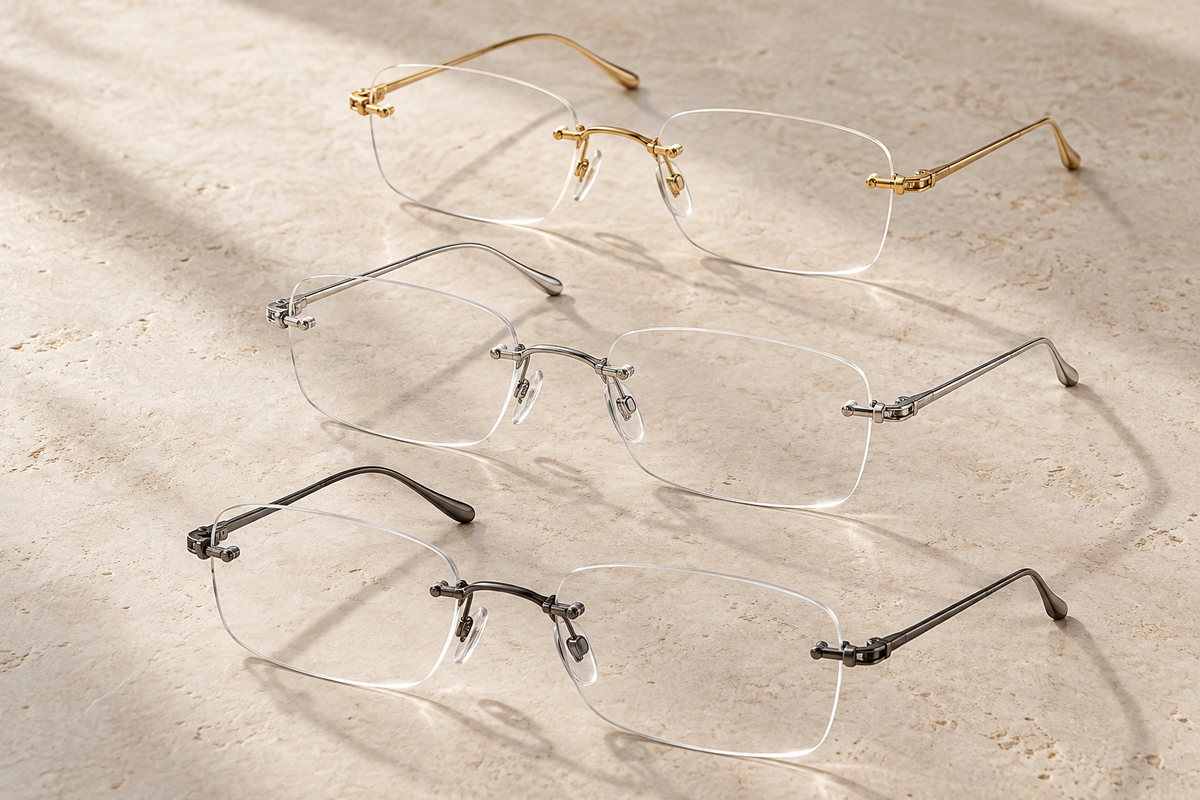
Frame design does not determine lens shape. With custom rimless glasses, customers can customize shape, size, and style separately from the frame hardware, subject to prescription and manufacturing suitability.
You might prefer the same softly rounded rectangle with either a glossy or a matte-looking edge. The silhouette, dimensions, and finish are different decisions. Begin with a shape you like, use the lens-size guide to understand its proportions, then consider the finishing detail.
Rimless Wear’s Live Try-On can help you compare shapes and sizes, as explained in the customization FAQ. Treat it as an appearance preview, not a precise simulation of edge reflections.
Three practical ways to decide
- You loved your previous rimless pair: bring that preference forward. Ask which edge finish it has and explain what you want to preserve.
- You want a clear, minimal outline: discuss polished edges, while keeping realistic expectations about visible thickness and reflections.
- You are unsure or have disliked shiny edges: ask to compare finishes and describe the lighting where you noticed the problem. You do not need to select the glossiest option just because it sounds more premium.
When you build your custom rimless glasses, confirm the edge selection alongside your other lens choices. If the wording or available combination is unclear, contact Rimless Wear before completing the configuration.
Frequently asked questions
Are polished edges always better for rimless glasses?
No. They offer a particular appearance, not a universal upgrade. Personal preference and experience with edge reflections matter.
Will polished edges make my lenses invisible?
No. They may look more transparent, but the edge can still be visible. Prescription thickness, lighting, and viewing angle all affect the result.
Does a non-polished edge mean the lens is unfinished?
Not in the sense of an incomplete prescription lens. It describes the absence of the glossy edge-polishing treatment, rather than the quality of the optical prescription.
Can I polish the edges myself later?
Do not use household abrasives or a home polishing tool. Ask an optical professional whether a change is appropriate for the finished lenses and mountings. Reworking an assembled pair is not something to assume is possible or risk-free.
The takeaway: choose the edge finish for the appearance and experience you prefer. Plan lens thickness, shape, fit, and coatings separately so that no single finishing option is expected to do every job.
Options checked October 16, 2026 against Rimless Wear’s active Polished Edges and Non-Polished listings. Background references: The Vision Council’s dispensing guide (PDF) and optician Michael Penczek’s explanation of edge-finish trade-offs. This is general eyewear education, not individualized medical advice.