
News / October 23, 2026
Can Rimless Glasses Have Bifocal Lenses? A Clear Guide
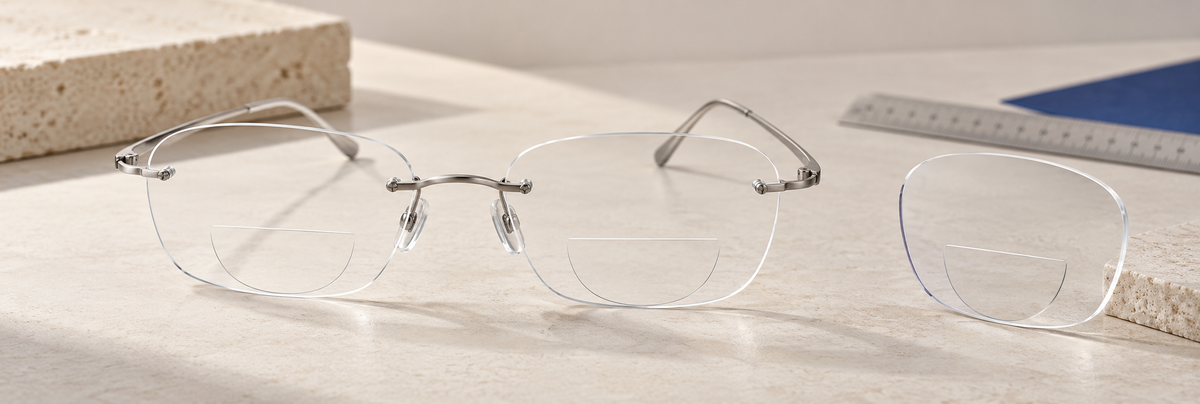
Yes—rimless glasses can have bifocal lenses. A lined bifocal combines two prescription powers in one lens: the main area is usually used for distance vision, while a smaller, visibly separated segment near the bottom is used for close work such as reading. The key is choosing a rimless lens shape and height that provide suitable space for both areas, then positioning the reading segment with accurate fitting measurements.
With custom rimless eyewear, the frame design does not determine the lens shape. You can choose the bridge-and-temple style separately from the lens outline, size and overall look. That freedom is useful with bifocals, but the final combination still needs to suit the prescription, segment placement, lens material and mounting design.
Main image: AI-generated conceptual illustration of lined bifocal lenses in rimless glasses. It is not a photograph of a Rimless Wear product or customer result.
What is a bifocal lens?
A bifocal lens contains two distinct viewing powers. The larger upper area normally supports distance vision. The smaller lower segment supplies the added power for near tasks. A visible line separates the two areas, so the change from distance to near is direct rather than gradual.
That visible segment is the easiest way to tell a traditional bifocal from a progressive lens. A progressive also combines more than one power, but it transitions through distance, intermediate and near zones without a visible dividing line. If you are comparing the two designs, see the progressive lenses in rimless glasses guide.
Why lens height matters for rimless bifocals
The bifocal segment needs to sit low enough to stay out of the way during ordinary distance viewing, yet high enough to be reached naturally for near work. The chosen lens must also leave enough usable area above and around the segment for the distance prescription and the rimless mounting points.
This does not mean every bifocal needs a large or oversized lens. There is no single minimum height that applies to every prescription, segment design and face. A shallow shape may work for one order and be unsuitable for another. The practical question is whether the selected shape and dimensions leave enough room for the prescribed optical layout.
Rimless Wear allows customers to refine lens width and height in millimeters. Use the current frame and lens sizing guide to understand the proportions, then have the final prescription and fitting details reviewed for the chosen bifocal design.
Which measurements matter?
Prescription and ADD
A complete multifocal prescription commonly includes an ADD value. ADD is the extra near power used for the reading portion of the lens. It does not replace the distance prescription; it works with it. If you are unsure whether your prescription is written for bifocals, progressives or another option, ask the prescribing eye-care professional rather than trying to interpret it on appearance alone.
Pupillary distance
Pupillary distance, or PD, helps place the optical design horizontally in front of the eyes. It is separate from frame width, lens width and bridge width. The Rimless Wear PD guide explains single and dual PD and why these measurements should not be confused with frame sizing.
Bifocal segment height
Segment height is the vertical fitting measurement used to position the top of the bifocal reading segment in the finished lens. It depends on how the selected glasses sit on the wearer, not just the nominal lens height on a product page. Accurate placement is important because a segment that is too high or too low can make the intended viewing areas awkward to find.
Bifocal, progressive or two single-vision pairs?
| Option | Viewing design | Visible line | Useful question to ask |
|---|---|---|---|
| Lined bifocal | Two distinct powers, usually distance and near | Yes | Do I prefer a clearly defined reading area? |
| Progressive | Gradual distance, intermediate and near zones | No | Do I need a smooth range that includes intermediate vision? |
| Two single-vision pairs | One power in each separate pair | No | Would I rather switch glasses for different tasks? |
No design is automatically best for everyone. Daily activities, prescription, previous lens experience and fitting measurements all matter. An eye-care professional can recommend a lens design for your visual needs; Rimless Wear can help you understand the available customization and ordering choices.
How rimless customization works with bifocals
- Choose the frame hardware: select the bridge-and-temple style and available color you prefer.
- Choose the lens shape: compare rounded, rectangular, geometric and other outlines independently from the frame design.
- Refine the size: select the overall width and check the resulting lens dimensions.
- Select prescription bifocals: choose the appropriate lens type during customization when available for the order.
- Provide complete details: submit the prescription and required fitting measurements using the available order method.
- Confirm compatibility: the prescription, lens height, segment layout, material and rimless mount must work together.
Start with the current rimless frame selection, then explore the separate lens shapes, sizes and prescription options.
How to choose a bifocal-friendly lens shape
Look beyond the outline alone. A shape can be stylish but still need adjustment to support its optical zones. These questions help keep the choice practical:
- Does the lens have enough usable vertical space for the selected bifocal segment?
- Will changing the lens height alter the proportions you like?
- Does the shape leave sensible room for the bridge and temple-side mounting points?
- Are the prescription, material and edge treatment suitable for the final dimensions?
- Have the PD and vertical fitting measurements been supplied as requested?
A taller lens can provide more layout flexibility, but the right answer is not simply “choose the tallest shape.” The goal is a balanced design that supports the prescription, fits the face and still looks the way you want.
Can you create your own bifocal lens shape?
Rimless Wear supports customer-designed lens shapes. A hand drawing, digital design, sketch or reference photo can be converted into a draft for approval. For a bifocal order, the requested outline must also leave appropriate room for the reading segment and mounting geometry. Read the custom lens-shape guide before submitting an idea.
Frequently asked questions
Do bifocal lenses always have a visible line?
Traditional lined bifocals do. The line marks the boundary between the main lens power and the near segment. If you want multiple viewing zones without a visible line, ask your eye-care professional whether progressive lenses suit your needs.
Do bifocals provide intermediate vision?
A standard bifocal is designed around two distinct powers, commonly distance and near. It does not provide the same gradual intermediate zone found in a progressive lens. Specialized designs exist, so the prescription and intended tasks should guide the choice.
Can small rimless lenses use bifocals?
Sometimes, but not every shallow shape is suitable. The result depends on the prescription, segment style and placement, fitting measurements, lens dimensions and rimless mounting points. Avoid relying on one universal minimum height.
Can bifocal rimless glasses have coatings or tints?
Compatible coatings and color options may be available, but the combinations can vary by lens material and prescription. Check the live customization choices or contact Rimless Wear before assuming a specific treatment is available for a particular bifocal order.
Can Live Try-On show the exact bifocal line?
Live Try-On is useful for comparing lens shapes, visual proportions and sizes. It should not replace prescription or segment-height measurements, and it may not represent the exact optical placement of a finished bifocal segment.
Choose the look first—then verify the optical layout
Bifocal lenses and rimless frames can work well together when style and measurements are considered as one order. Choose the frame hardware, lens shape and size you like, then make sure the prescription, PD, segment height, lens material and mounting design are compatible before production.
Explore rimless frames and begin your custom pair.